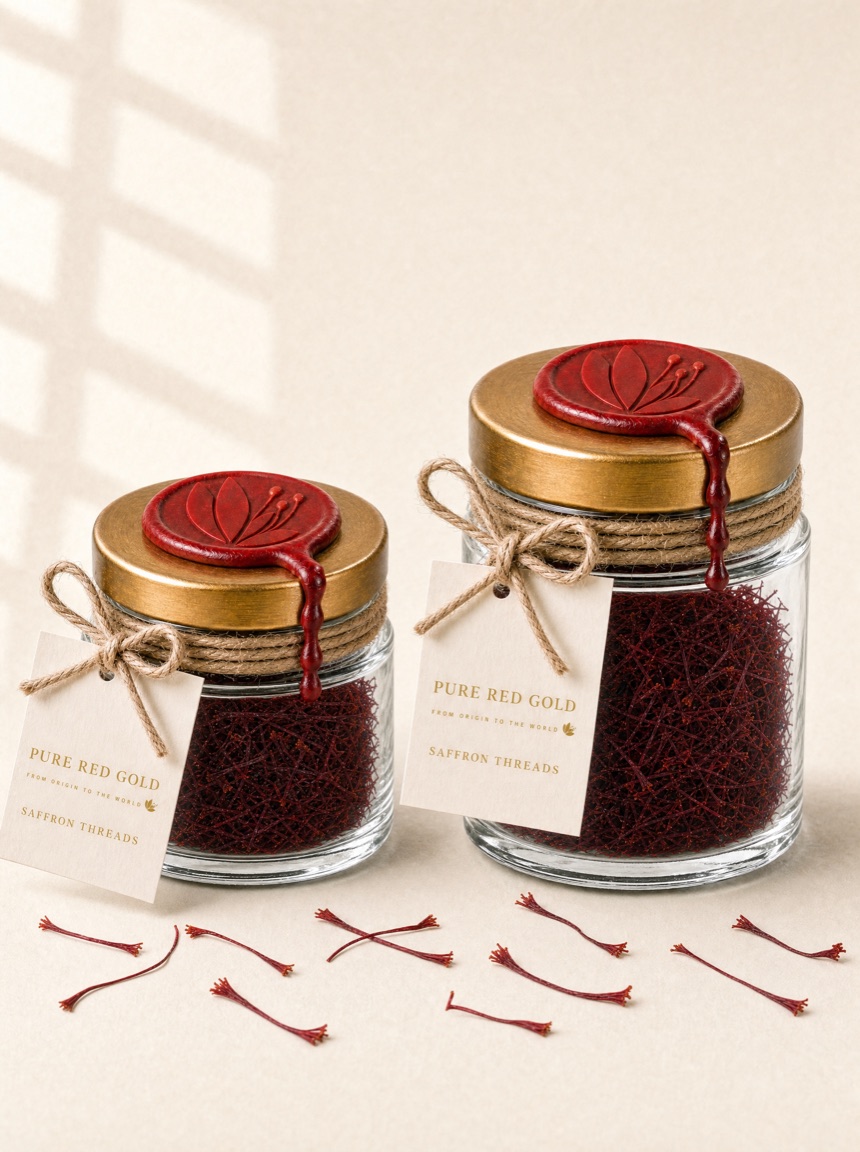
PRG-01 · Super Negin saffron threads · Abu Dhabi
Saffron Threads
Whole crimson stigmas, cut above the pale style — the grade the trade calls Super Negin, and the reason a pinch is enough. Picked before sunrise, dried the same day, tasted against lots from the world's premier saffron regions, and bottled only if it clears Category I. Sealed in clear glass under crimson wax, because the grade should be visible before you pay for it — the length of the thread, the depth of the red, whether it is all stigma. Light is still the enemy of everything you're paying for; that is what the cupboard is for.
In stockSKU PRG-SAF-TH-02G
Secure Shopify checkout · UAE delivery · the proof
- ISO 3632 · Category IThe house selection standard
- ADAFSA permittedAbu Dhabi food-safety certificate
- Secure checkoutShopify · cards & WhatsApp
- Grade
- SUPER NEGIN — all stigma, no style
- Selection
- Category I only — the house standard
- Origin
- Disclosed per lot — on the certificate
- Harvest
- 2026
- Grading
- ISO 3632 — certificate published per harvest lot
- In the box
- The water-test card — spare threads + instructions
How to use it
Never straight from the jar into the pot. Steep 10–15 threads in two tablespoons of warm — not boiling — water, milk or stock for twenty minutes, then add liquid and threads together. One steep colours a family-size rice dish; the perfume arrives ten minutes later, the colour deepens for an hour.
Storage
Keep it in its glass, lid tight, in a cool cupboard — never the fridge, never a windowsill. The glass is clear, which is how you see what you own, so the cupboard is what keeps the light off it. Light bleaches crocin, the compound you paid for. Properly kept, the threads hold their strength past two years; ours carry the harvest year so you never have to guess.
Delivery
Collect from the flagship boutique at Nation Towers Mall, Abu Dhabi — collection is always free. Delivery anywhere in the UAE is arranged in the WhatsApp conversation, and we agree the timing with you before the order leaves us.
Every jar is an invitation: run the water test on your own kitchen counter. Real saffron gives up its gold slowly and stays red. Here's how to read it →
Read the label, anywhere
The supermarket sachet, and this jar.
The grade, in plain words
What Super Negin is, and what it is not.
Saffron grades describe which part of the thread you are buying. Each crocus stigma is deep red at the tip and fades to a pale base called the style, and the style weighs something while colouring nothing. Every grade name is an account — honest or otherwise — of that ratio, which is why comparing two jars on price per gram alone tells you almost nothing. It is perfectly possible to pay less per gram for the part of the flower that does no work.
Only the red stigma, cut clean above the style, threads long and unbroken. The highest colouring strength per gram of any standard grade, and what is in this jar.
What we bottleWhole red stigmas with a whisper of style left at the base. Excellent saffron, honestly named, and a shade less potent per gram than Super Negin.
One belowRed tips cut short: potent, but fragmented. Fine for cooking — the trouble is the labelling, because broken Sargol is routinely passed off as a premium grade.
Where mislabelling livesStigmas with the pale style still attached, or whole threads tied into bundles. More weight, less colour. Never sold under this roof.
The filler gradesISO 3632 is what turns a grade from a boast into a measurement. It is the international laboratory standard for saffron: a lab reads crocin for colouring strength, safranal for aroma and picrocrocin for taste, then assigns a category, of which Category I is the highest. Every lot bottled here is selected to Category I, and the report for each harvest lot is published rather than described — together with that lot's origin, which is disclosed on the certificate travelling with the jar. The Grading School takes the grades apart properly; the traceability page holds the reports themselves.
Using it
Test it, bloom it, and use far less than you think.
The test comes first, because it takes ten minutes and settles everything. Drop three threads into a glass of room-temperature water and do not stir — stirring hides the evidence. Wait ten minutes. Real saffron sends up a slow golden halo while the threads themselves stay defiantly red; a dyed fake throws an instant red cloud and the threads bleach pale. Rub a wet thread between two fingers as a second check: a real stigma stains gold and holds together, where corn-silk fakes fall apart. Every box leaves here with spare threads and that card in it, because the only house that can invite the test is one that passes it. How to read the result.
Then bloom it, and never tip threads straight from the jar into the pot. Steep ten to fifteen threads in two tablespoons of warm — not boiling — water, milk or stock for twenty minutes, then add the liquid and the threads together. Heat without steeping wastes half the colour; steeping without patience wastes half the aroma. The perfume arrives about ten minutes after it meets the dish, and the colour goes on deepening for an hour after that.
The dose is smaller than almost anyone expects. Ten to fifteen threads serve four people, and a gram holds roughly four hundred and fifty of them. For milk and desserts, eight to ten threads a litre. For tea, three or four threads a pot, left to sit five minutes. The two things to avoid are boiling threads directly, and grinding them before steeping without a pinch of sugar to carry them.
The jar itself
Clear glass, a harvest year, and two sizes.
The glass is clear on purpose. A grade is something you ought to be able to see before you pay for it: the length of the thread, the depth of the red, whether it is all stigma or whether a pale base has been left on. An opaque tin asks you to take the label's word instead. The trade-off is that light is the enemy of the very thing you are buying, since light bleaches crocin — so the jar belongs in a cool cupboard with the lid tight, never in the fridge and never on a windowsill. Kept that way, the threads hold their strength past two years.
The harvest year on the label is the other half of that bargain. Saffron does not announce its age, and a thread that has sat in a warehouse for three seasons looks much like one that has not. Harvest 2026 printed on the jar names the crop these threads came from, which makes freshness something you read rather than something you are promised. A jar with no year on it is a jar with something to gain from your not knowing.
Three sizes, and the arithmetic chooses between them. At roughly four hundred and fifty threads to the gram, and ten to fifteen threads to a dish for four, even the 2 g jar is not a sample — it is a long run of dinners for a household that cooks with saffron now and then. The 5 g jar suits the kitchen that reaches for it weekly, anyone cooking for a crowd, and the buyer who wants one jar to keep and one to give away. The 15 g jar is for the household where saffron is a staple — rice every week, tea most mornings — and it is the lowest price per gram of the three. All three are the same saffron from the same lot; only the quantity changes.
Questions
Asked by people about to spend money.
01What is Super Negin saffron?
Super Negin is the grade made up only of the red stigma, cut clean above the pale style, with the threads long and unbroken. It carries the highest colouring strength per gram of any standard grade, which is why a pinch is enough and why it is the grade serious houses bottle. Ours is selected to ISO 3632 Category I, carries its harvest year on the label, and has its origin disclosed per lot on the certificate that travels with the jar.
02How is Super Negin different from Negin and Sargol?
By how much of the pale style is left in the jar. Negin is whole red stigmas with a whisper of style at the base — excellent saffron, honestly named, a shade less potent per gram. Sargol is red tips cut short: potent but fragmented, and the grade where the mislabelling lives, because broken Sargol is routinely passed off as a premium one. Pushal and bunch keep the style attached or tie whole threads into bundles, which buys you more weight and less colour.
03How do I check that the saffron I bought is real?
Three threads, a glass of room-temperature water, ten minutes, and no stirring. Real saffron sends up a slow golden halo while the threads themselves stay red; a dyed fake throws an instant red cloud and the threads bleach pale. Rub a wet thread between two fingers as a second check — a real stigma stains gold and holds together, while corn-silk fakes fall apart. Every box we send includes spare threads and the instructions on a card, so the test can be run on your own counter.
04How much saffron should I use, and do I have to soak it first?
Less than you think, and yes. Ten to fifteen threads serve four people, and a gram holds roughly four hundred and fifty of them. Steep them in two tablespoons of warm — not boiling — water, milk or stock for twenty minutes, then add the liquid and the threads together, because heat without steeping wastes half the colour. For milk and desserts, eight to ten threads a litre; for tea, three or four threads a pot. Never boil threads directly.
05Should I buy the 2 g, 5 g or 15 g jar, and how do I store it?
Take the 2 g jar if saffron is an occasional dish, the 5 g if you cook with it weekly, are cooking for a crowd, or want one jar to keep and one to give, and the 15 g if saffron is a daily staple in your kitchen. Either way, store it in its own glass with the lid tight in a cool cupboard — never the fridge, never a sunny shelf, because light bleaches the crocin you paid for. Kept properly the threads hold their strength past two years, and the harvest year on the label means you never have to guess how old they are.